Gaming Is Important for Cognitive and Social Development
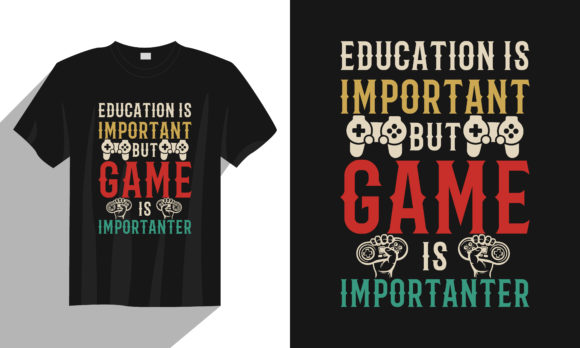
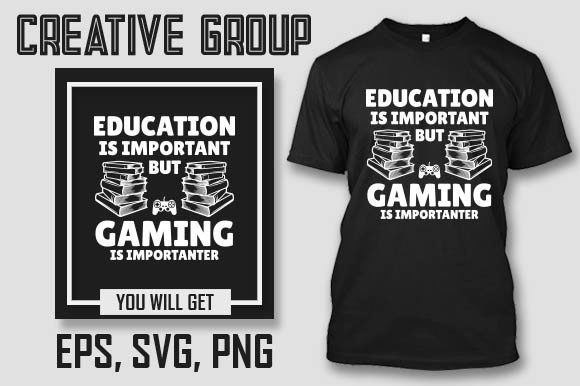
While the phrase Gaming is IMPORTANTER might initially seem like a playful exaggeration, it points to a significant and evolving conversation about the value of interactive digital experiences. It speaks to the idea that gaming, often unfairly stereotyped as mere entertainment or distraction, holds profound importance that complements and, in certain contexts, surpasses traditional forms of engagement like passive education. This isn't about diminishing education's critical role. Instead, it's about recognizing that the active, applied, and often collaborative learning found in gaming environments addresses fundamental human needs for problem-solving, social connection, and adaptive thinking in ways that standard educational models sometimes struggle to replicate.
Understanding the Core Concept of Gaming is IMPORTANTER
Gaming is IMPORTANTER represents a mindset that prioritizes applied, experiential learning. Education is undeniably important for transmitting foundational knowledge and facts. However, the "importanter" concept suggests that the dynamic, interactive, and often high-stakes environments of games are crucial for developing the skills to apply that knowledge effectively. It's the difference between learning the theory of physics in a textbook and applying principles of force, trajectory, and timing to solve a puzzle in a game to progress. Gaming provides a continuous loop of challenge, attempt, feedback, and mastery—a cycle deeply aligned with how humans learn best.
Adults today face a world that demands not just information retention, but agility. The challenges are multifaceted: needing to make quick decisions under pressure, collaborating with diverse teams across digital spaces, learning new systems and tools rapidly, and maintaining motivation for long-term skill development. Traditional linear education can lay the groundwork, but it often lacks the immersive, fail-safe environment to practice these soft and hard skills in combination.
How Gaming Addresses Modern Challenges and Goals
Consider the common professional goal of improving leadership and project management. A game like a complex multiplayer raid or a strategy-based city builder requires planning, resource allocation, role assignment, real-time communication, and adaptation to unforeseen events. The practical application here is direct. You're not reading about team dynamics; you're experiencing them, with immediate consequences for failure and tangible rewards for success. This is where Gaming is IMPORTANTER manifests—it turns abstract concepts into lived experience.
For adults seeking cognitive improvement, gaming offers targeted challenges. Puzzle games enhance pattern recognition and logical deduction. Fast-paced action games can improve visual processing speed and attention switching. Simulation games foster systems thinking and long-term strategic planning. Each genre becomes a tool for exercising specific mental faculties, with the built-in reward systems keeping engagement high, a key factor in adult learning where self-motivation can wane.
Building Social Bonds and Digital Literacy
Another critical need for many adults is maintaining social connection and understanding digital cultures. Gaming communities are vast, providing spaces for structured social interaction. Coordinating with teammates, navigating in-game economies, and participating in guilds or groups teach nuanced digital communication and collaboration. For individuals in remote work or geographically isolated situations, these platforms become vital social outlets, practicing interpersonal skills in a low-stakes, goal-oriented context. This aspect of gaming directly supports mental well-being and community building, needs that are increasingly prominent in adult life.
Practical Applications and Real-World Outcomes
Implementing the Gaming is IMPORTANTER philosophy doesn't mean abandoning other pursuits. It means intentionally selecting and engaging with games to meet specific objectives.
- Skill Transfer: Choose games that mirror desired real-world skills. For someone wanting to learn a new language, playing narrative-driven games in that language with community interaction can accelerate learning. For a manager, strategy games that involve delegation and logistics can offer fresh perspectives on resource management.
- Cognitive Maintenance: Regularly engage with games that challenge different parts of the brain. Alternating between a logic puzzle game, a fast-paced reaction game, and a complex simulation can serve as a broader cognitive workout than many dedicated "brain training" apps.
- Social Practice: Use cooperative or team-based games as a scheduled social activity. This can be more engaging and skill-building than passive social media consumption, providing a shared goal and a reason for structured communication.
The outcomes are measurable. Adults report improved problem-confidence, better stress management through engaging distraction, stronger online communication skills, and even a renewed sense of curiosity and learning agility. The feedback loop inherent in games—where every action has a result—reignites the experimental mindset that formal education often extinguishes.
Tailoring the Approach for Different Users
The way an adult integrates Gaming is IMPORTANTER will vary greatly based on their needs and starting point.
The Career-Focused Professional: This user might focus on games that emphasize strategic planning, negotiation, or leadership. Titles involving complex economies, diplomacy, or team-based objectives are key. Their engagement is likely scheduled and purposeful, treating game time as a development session rather than casual leisure.
The Lifelong Learner: This individual uses games as an exploration tool. They might play historical simulations to understand events, use sandbox games to experiment with creative engineering, or engage with story-rich games to explore narrative and philosophy. For them, gaming is a portal to applied knowledge across disciplines.
The Social Connector: Priority here is on multiplayer experiences that foster community. Whether it's a casual cooperative game or a massive online world, the goal is the shared experience and the practice of maintaining relationships and teamwork in a digital space, which is increasingly relevant in both personal and professional life.
Recommendations and Useful Considerations
To start applying this mindset, first identify one or two key areas you wish to develop: is it strategic thinking, quick decision-making, patience, collaboration, or simply cognitive stimulation? Then, research game genres aligned with those goals. Don't be intimidated by complexity; many games have beginner-friendly communities and tutorials.
- Start with Purpose: Allocate time for gaming with a specific intent, just as you would for reading or exercise.
- Engage Reflectively: After a gaming session, briefly consider what skills you exercised. Did you plan a long-term strategy? Did you solve a multi-step puzzle? Did you coordinate with a team?
- Balance is Key: Gaming is IMPORTANTER is about complementary importance. It should integrate with, not replace, other forms of learning and social activity.
- Community Matters: Seek out positive, goal-oriented communities around your chosen games. The social learning and support enhance the benefits significantly.
Ultimately, the principle of Gaming is IMPORTANTER encourages a reevaluation of a dominant modern medium. It moves gaming from the category of "entertainment" to a category of "experiential toolkit." For adults navigating a complex, digital, and rapidly changing world, the skills honed in virtual environments—resilience, systems thinking, collaboration, and adaptive learning—are not just supplementary; they are increasingly fundamental. By approaching games with intention and reflection, adults can harness this powerful platform for continuous growth, making the playful phrase a legitimate lens for personal and professional development.